

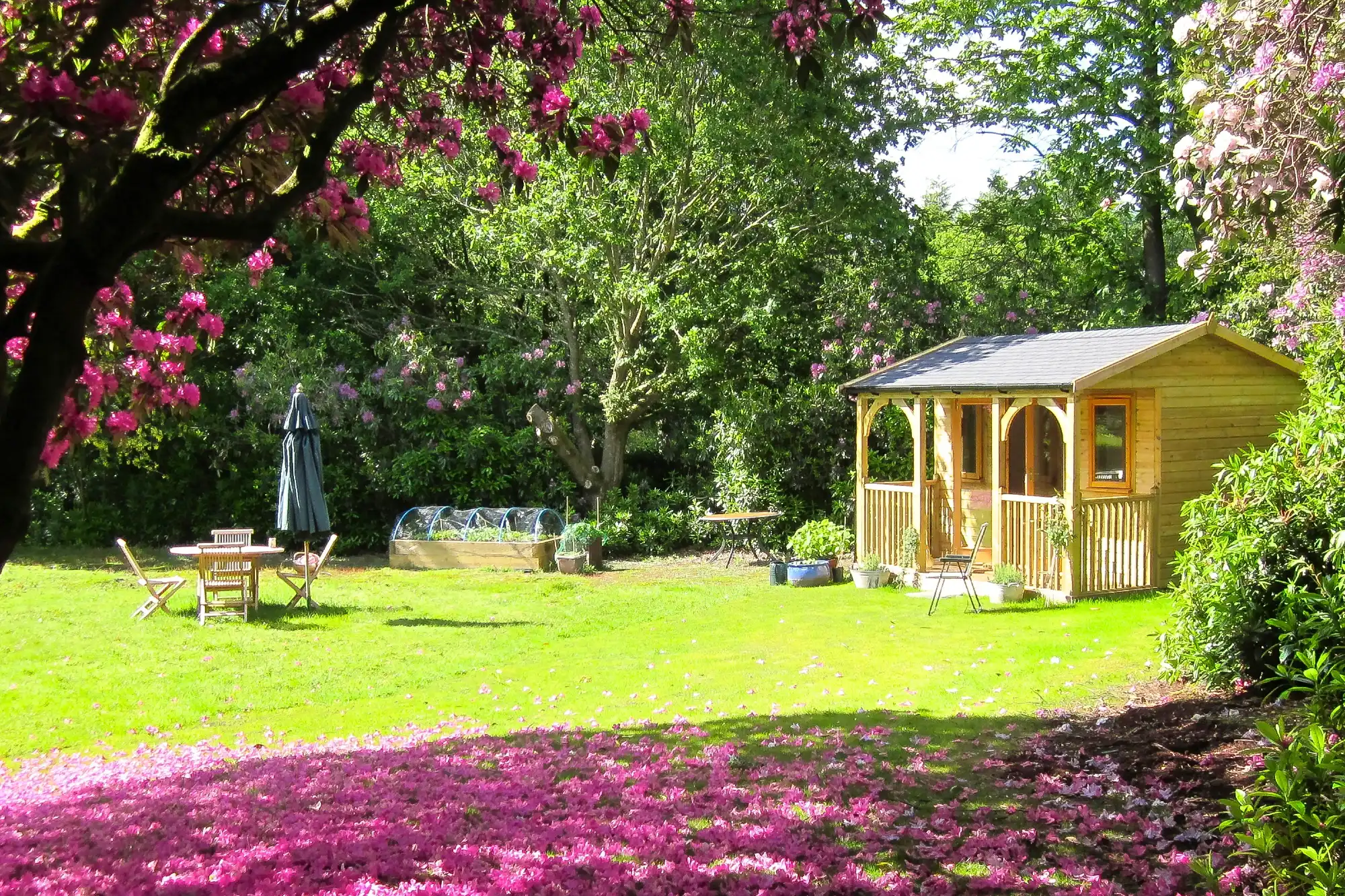
What Is a Garden Pavilion?
A garden pavilion is a traditional timber building with an enclosed room plus a covered veranda, often with decking and balustrade detailing.
What Is a Garden Pavilion? A Traditional Veranda-Fronted Garden Building.
A garden pavilion is a traditional-style timber garden building that combines an enclosed internal space with a covered veranda area. It’s a classic design often associated with tennis and bowling clubs, but it works just as well as a striking feature in a private garden.
Unlike a garden room, which is typically designed as a fully insulated, year-round workspace, a pavilion is usually chosen for its timeless appearance and the way it blends indoor and sheltered outdoor space.
The Key Features of a Pavilion
A Chart-style pavilion is defined by:
- A covered veranda to the front or side, creating a sheltered area outside the main room
- Decked/veranda floor that feels like an outdoor extension of the building
- Traditional detailing, often including balustrade-style spindles, posts and bracing
- A fully enclosed internal room behind the veranda for storage, seating or general use
This veranda-fronted layout gives you a place to sit out even when the weather changes — without needing a separate pergola or awning.
What Can You Use a Pavilion For?
Pavilions are versatile and can be used for:
- A sheltered garden seating area with a classic look
- Outdoor hosting, where guests can sit under cover
- A hobby or storage space with a useful veranda in front
- A club or community pavilion for meeting points or viewing areas
Pavilion vs Summer House vs Garden Room
- Pavilion: Traditional building with an enclosed room plus a covered veranda (often decked and detailed).
- Summer House: Enclosed leisure building, usually focused on the internal space rather than a veranda feature.
- Garden Room: Enclosed building designed for modern, practical, year-round use (often insulated) We offer garden room gyms or garden room studios and garden room offices.
Does a Pavilion Need a Concrete Base?
Yes — like most enclosed timber buildings, a pavilion should be installed on a solid, level base to ensure stability and longevity. This is essential for accurate installation and to keep the structure protected from ground moisture.